Greensboro summers have a particular rhythm. By mid-June the azaleas give way to hydrangeas, cicadas start their evening chorus, and every pool in town becomes the house MVP. If you’re lucky enough to have one, the space around that water decides how it feels to live with. A well-planned poolside landscape turns a hot rectangle into a backyard retreat. A careless one becomes a maintenance chore and a slip hazard. After two decades working on sites from Fisher Park to Adams Farm to Lake Jeanette, I can tell you this much: the best landscaping in Greensboro NC anticipates heat, humidity, clay soils, and family habits, then builds beauty around that reality.
What “best” looks like in a Greensboro poolscape
A good pool design looks finished on day one. A great one wears well through August storms, late fall leaf drop, and the occasional polar snap. The difference lives in the soil work, the plant choices, and the small details like where splash water drains or how a gate latch lines up with a grill route. In this climate, poolside landscaping should deliver four things simultaneously: privacy that breathes, surfaces that stay cool, planting that can take reflected heat, and a maintenance plan that doesn’t steal your weekend.
You’ll hear plenty of talk about curb appeal and resale, and those matter. But the daily reality matters more. If the rosemary by the pool keeps dropping needles into the skimmer, or the oak overhang feeds pollen strings into the water every April, you’ll resent that pretty picture. The best landscaping in Greensboro NC keeps debris down and comfort up without looking sterile.
The Greensboro variables that drive good choices
Microclimate rules poolside. The water and decking reflect sunlight and raise temperatures by 5 to 10 degrees on a clear afternoon. Clay soil slows drainage and compacts under foot traffic. Afternoon thunderstorms hit hard, flattening soft plants and moving mulch if it’s not locked in. Add to that the chemistry of chlorinated water, the slipperiness of algae after a week of humidity, and the hard freeze that will bite tender evergreens at least once every few winters.
I learned early to treat “full sun” labels with skepticism near water. That white pool deck can double the stress on foliage. A hardy plant planted two feet from coping can scorch if it hugs the stone. A slight setback, even 18 inches, keeps plants healthier and makes brushing the deck easier. The goal is to embrace heat where it helps, like for Mediterranean herbs in planters, and shield it where it hurts, like on turf patched right against southern exposure coping.
Hardscape that handles heat and splash
Materials are not interchangeable here. I’ve tested limestone flags that turned slick under algae after one storm, and bluestone that burned bare feet at 3 p.m. on a July Saturday. For our area, textured concrete with a light broom finish remains the most practical walk surface. It drains, it grips, and it stays comparatively cool. If you prefer stone, choose a lighter color and a cleft texture, and seal it with a breathable, non-gloss product. Pavers can work well when set on a proper base and polymeric sand joints, but pay attention to color. Dark charcoal looks sharp in April, then becomes a skillet in July.
Coping deserves its own thought. Bullnose travertine performs well in heat if you select a denser grade, but the wrong batch can spall or stain with chlorinated water. Thermal bluestone looks classic, but in sun it needs shade relief from umbrellas or pergolas. In Greensboro I often pair a pale, tumbled paver coping with a broom-finished deck, all on adequate base, then build shade through pergola slats or a sail positioned to avoid late-afternoon glare.
Splash zones are another detail. Where do kids jump? That is where you install French drains cut into a gravel trench, pitched away from footpaths. If you let water sheet across a shaded corner, expect algae within a week. I’ve watched one client scrub the same three tiles every Monday until we added a discreet trench drain and re-graded. Half a day of work, and the slime never returned.
Plant selections that thrive without shedding into the pool
Greensboro’s plant palette is wide, but the poolside palette has to be choosy. You want evergreen structure, seasonal color, and low litter. Skip anything that drops needles, seed pods, or sticky sap within reach of the water. I avoid crape myrtles close to a pool. They look gorgeous from mid-summer on, but the petal confetti in the water feels endless, and the seed capsules clog baskets in fall. I also steer clients away from pines within 20 feet of the basin. Pine straw on a breezy day becomes a daily skim job.
Compact hollies do well here, especially varieties that don’t fruit heavily. Soft Touch Japanese holly forms a tidy mound without prickles, and it behaves around chlorine. Boxwoods can work if airflow is good and mulch doesn’t bury the crown. Choose a blight-resistant cultivar and keep them a couple feet off the coping to reduce heat stress. For a taller screen, Tea Olive brings a sweet scent on fall evenings and generally keeps its leaves to itself. Loropetalum gives reliable purple foliage and spring bloom without messy seed pods, and it tolerates reflected heat better than many shrubs.
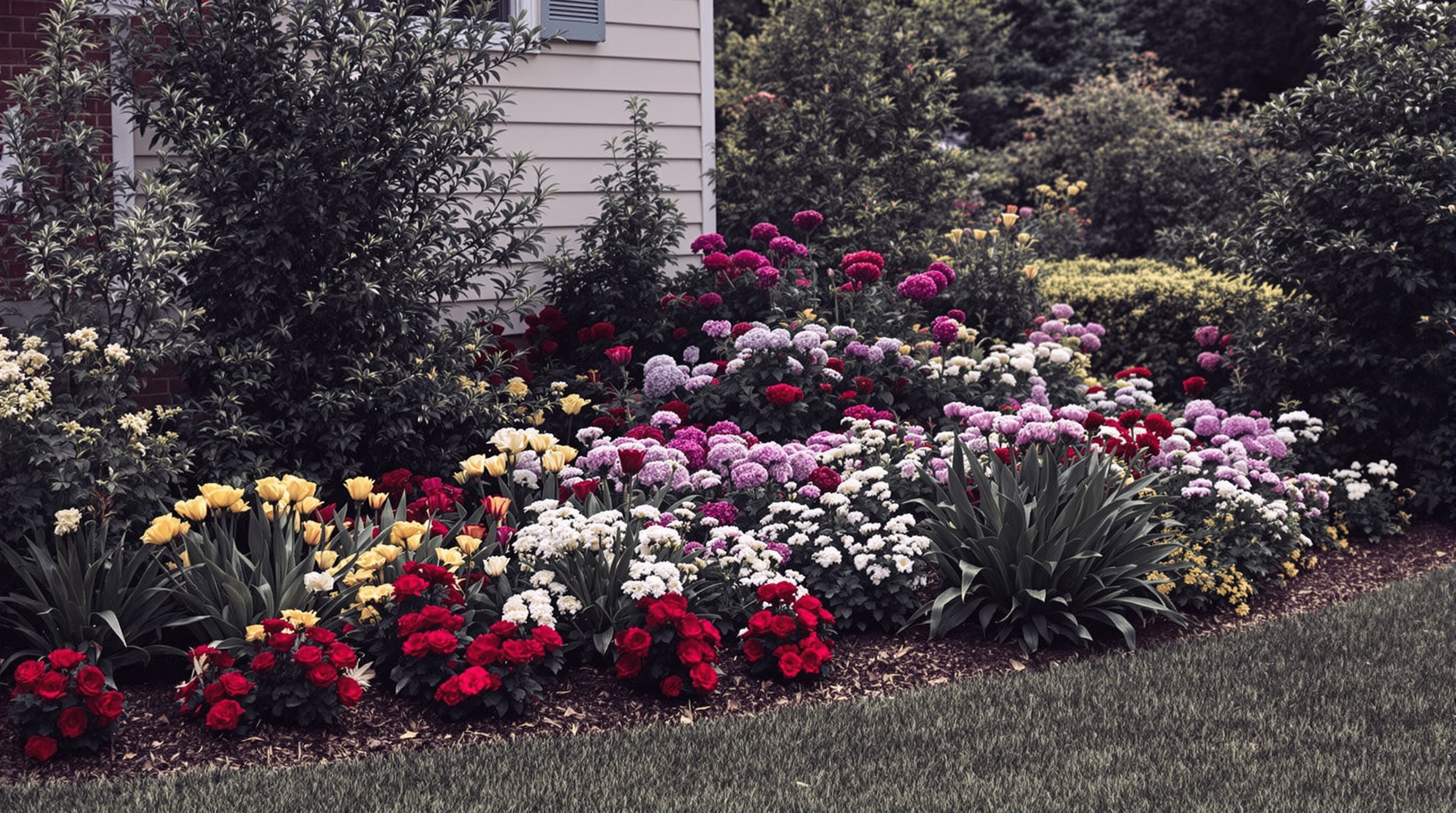
Perennials should be chosen for form as much as flower. Agapanthus loves the reflected warmth and offers clean, strap-like leaves that don’t disintegrate into slush. Salvia ‘Caradonna’ will bloom its heart out in Greensboro and leaves a tidy hummock in winter. Daylilies, especially evergreen or semi-evergreen varieties, are stalwarts around pool edges because they absorb splash, bloom for weeks, and their spent flowers lift easily by hand. Avoid plants that flop across paths after rains. For example, peonies hate our summer humidity near hardscape. I learned to keep them out in the lawn beds, not by water.
Grasses are a mixed bag. Dwarf fountain grass can be lovely, but those summer seed heads eventually break loose and sail into water. I prefer compact feather reed grass cultivars near pools because their seed heads are tighter and easier to manage. Where movement is needed, dwarf muhly grass in a container gives you the sparkle without spreading seed into the skimmer.
For trees, think small and considerate. Japanese maple in a pot set back from the coping can be a star, with leaves that tend to clump rather than crumble. Little Gem magnolia provides year-round presence, and while it drops the odd leaf, they are large and easy to pick up. If you crave shade, a lacework pergola is often cleaner than a canopy tree, and it allows selective cloth or vine cover.
Greensboro’s clay, drainage, and the root of the matter
Most pool decks sit on compacted subgrades, and the adjoining planting areas inherit that compaction. The best landscaping in Greensboro NC takes the time to fracture the soil below planting beds and add organic matter that won’t vanish in one season. Pine fines mixed with composted leaf mold work well here. Avoid laying landscape fabric under mulch near pools; fabric can trap moisture that breeds mosquitoes in the mulch layer and makes hand weeding miserable. Instead, use a three-inch layer of hardwood mulch locked in by steel edging or a soldier course of pavers. I’ve pulled fabric out of enough soggy beds to call it what it is in this context: a shortcut that backfires.
Drainage deserves a second mention. Pools already give your stormwater plan a workout. You need a clear path for deck runoff, roof downspouts, and irrigation overspray. If the house downspout dumps toward the pool, route it into solid pipe under the patio to daylight lower in the yard or into a dry well sized for our storm patterns. A dry well for a 500-square-foot roof section should hold at least 60 to 100 gallons, depending on soil percolation. On clay, always assume the slow end and oversize.
Privacy that breathes, not boxes you in
Greensboro neighborhoods vary. In Sedgefield you might need a soft screen from a fairway view, while in Lindley Park ten feet separates your pool from a neighbor’s kitchen window. The worst move is building a leafy wall that traps heat and kills airflow. You end up with a muggier microclimate and more mildew. Instead, layer height and texture. A low evergreen hedge, mid-height flowering shrubs, then higher open-form trees or a trellis panel where sight grok.com lines are most direct. A cedar or aluminum fence with horizontal slats gives security and lets breezes through. Pair that with a few tall planters planted with bamboo alternatives like clumping dwarf clumping maiden grass or horsetail reed in contained troughs for a modern privacy rhythm.
I’ve installed louvered privacy screens that can tilt for airflow and rain relief. They cost more upfront than a row of shrubs, but they never drop leaves in your pool and they adjust with the season. If you do plant for privacy, respect setbacks from the coping and remember growth. A shrub that tops at 6 feet still needs 4 to 5 feet of bed depth to breathe. Don’t cram it into a 24-inch strip then fight it with hedge trimmers for the next decade.
Shade that earns its keep
We have more 90-degree days than we did fifteen years ago, and shade transforms how you use the pool. Umbrellas are flexible but vulnerable in storms. Build at least one fixed shade source that aligns with your routine. If you read or work under an outlet near the pool, set a pergola with a partial cover and a fan rated for damp locations. Place columns where they don’t interrupt traffic from house to water. I like to cheat the posts just outside the walking path and extend cantilevered beams over seating. Sail shades are a close second, but anchor them to posts embedded in concrete footers, not fence posts. In gusts, a poorly anchored sail turns into a sail.
For vines, Confederate jasmine and native crossvine behave well on trellises and bring fragrance in late spring. Keep wisteria away from pool structures unless you are committed to pruning like a hawk. It will test your patience and your woodwork.
Lighting that respects the night
Pool lights are one thing. Landscape lighting is another. I aim low and warm. 2700K fixtures keep the space inviting and there’s less glare on water. Path lights spaced with intention, not on a symmetrical march, reveal steps and edges. A few shielded spotlights aimed at specimen trees beyond the pool extend the view without blinding swimmers. In Greensboro’s bug season, avoid uplighting dense shrubs near seating; it turns them into moth magnets. Put critical zones on separate transformers or at least separate runs with adjustable timers, so late-night swims don’t feel like stage performances.
I’ve replaced more than a few glaring blue-white LED sets that looked high-tech in catalogs but harsh in person. Warm, shielded, and dimmable beats bright every time.
Irrigation and water chemistry coexistence
Chlorine and salt systems both fling splash water into nearby beds. Saltwater isn’t a problem if you select tolerant plants and avoid overspray. What does cause trouble is dialing irrigation like a lawn. Poolside beds need targeted, lower-volume watering. Drip lines under mulch make sense, but check them twice a year for clogs. A 0.6 gallon-per-hour emitter every 12 inches on a loop near the root zone of shrubs will keep most plantings happy if you run it 30 to 45 minutes twice a week in July, then less in shoulder seasons. Overhead spray near the deck invites slippery algae. Keep sprinkler arcs off hard surfaces or adjust with a pressure regulator and appropriate nozzles.
Backflow preventers are mandatory and not just for code. I’ve seen irrigation water back-siphon when a hose bib sat below pool water level. It won’t happen often, but the one time it does, you’ll be glad for a properly installed device.
Deck comfort, furniture, and the small layouts that feel big
A pool feels bigger when you break the deck into clear zones. One area for wet entry and towels, another for lounging, a third for grilling or a bar. Even on a small lot, you can create this with position and planters. Furniture scale matters. Oversized loungers look great in photos and swallow space in Greensboro backyards. I prefer slimmer aluminum frames with quick-dry sling fabric that won’t become heavy sponges after an afternoon storm. Reserve cushioned pieces for covered areas, and choose fabrics that breathe. Black powder-coated metal overheats. A soft gray or sand tone lets you sit without hopping up.
If you can afford only one custom element, make it a long bench along the deep end or near steps. It grounds a space, hides storage underneath for pool toys, and offers seating at parties. Add two GFCI outlets near seating for fans or laptop chargers, and you’ll find yourself spending weeknights out there in September when the light turns kind.
Safety without the eyesore
Fencing is non-negotiable, but it doesn’t have to look like a kennel. Black aluminum picket fences almost disappear visually and meet code. Set them a couple feet back from planting beds, then fill the foreground with soft shrubs and perennials. Self-closing, self-latching gates should be oriented away from slippery slopes and never swing over steps. Non-slip coatings help on older decks; choose a fine aggregate product that adds texture without feeling like sandpaper on bare feet.
If you add a fire feature, place it out of the splash zone and downwind from primary seating. The mix of pool water and ash isn’t great, and you don’t want smoke drifting over swimmers. For gas lines, plan routes before hardscape goes in. I’ve seen too many last-minute trenches cut into new patios, which means you cut into warranties too.
Seasonal care patterns that keep things easy
A pool landscape in Greensboro rests in January then accelerates fast by March. Build a routine that hits the real work windows and keeps little issues from becoming projects.
- Spring: Inspect drainage after the first two big rains. Top up mulch to maintain three inches, not more. Check irrigation for leaks and adjust runtimes as temps climb. Prune winter damage carefully, then feed shrubs with a slow-release fertilizer if soil tests indicate need. Summer: Skim debris at low sun angles when glare is manageable. Cut back spent perennials before they flop. Spot-treat weeds instead of nuking beds. Power-wash the deck only if algae shows up, and pre-wet planting beds to protect roots from splashback. Fall: Net or manually remove leaves before they saturate and sink. Reduce irrigation as nights cool. Thin shrubs that pushed too hard under summer fertilizer. Re-seal porous hardscape every two to three years on a dry week. Winter: Run the system on sunny afternoons to keep water circulating. Cover furniture or move cushions indoors. If a hard freeze is forecast, water evergreens the day before to reduce desiccation.
That single list covers the cadence I share with clients around the city. Simple, predictable steps beat reactive sprints.
Budgets, phases, and where to spend first
You can invest wildly in a pool landscape, but you don’t have to. With a modest budget, spend first on drainage, hardscape safety, and primary screening. Plants can grow into a plan, but water that has nowhere to go or a deck that will slick over in humidity cannot. If your budget is mid-range, add shade and lighting in the first phase. Furniture and planters can follow. On high-end projects, luxuries like automatic covers, louvered roofs, or outdoor kitchens become part of the program, but the principles remain. Put money into the bones that save your time and protect your investment.
I’ve phased many Greensboro projects over 18 to 24 months. The best results happen when the master plan exists from the start, even if you only build half in year one. Conduits in place for future lights or gas lines cost little now and a lot later.
Local materials and sourcing that hold up
Our suppliers in the Triad carry solid options when you ask for them by name. For mulch, a double-shredded hardwood that has cured through a season resists matting and won’t float as easily. For stone, ask for thickness and origin. A consistent 1.5-inch paver on a compacted base with polymeric sand lasts; a mixed stack of thin flags on sand invites rocking and trips. If you want gravel accents, use a tight, angular mix like 3/8-inch granite that locks in, not smooth pea gravel that travels into the pool with every step.
For plants, local growers who propagate for Piedmont conditions produce tougher stock. You’ll see the difference by August. A holly grown hard under full sun won’t flinch when it meets reflected heat, while a hothouse specimen might sulk and drop leaves. If a contractor suggests a plant you haven’t heard of, ask where they’ve used it poolside in Greensboro. Good pros can point to addresses and history.
Real-world examples and lessons learned
Near Irving Park, a client wanted evergreen privacy and summer color without fuss. We set a staggered row of Tea Olive and dwarf magnolia, underplanted with agapanthus and catmint. A pale concrete deck with a broom finish wrapped the pool, and we embedded a narrow slot drain along the diving board path. The big win, in their words, was the wind path. We kept the northern fence open with horizontal slats, which preserved the prevailing breeze. Their August nights felt five degrees cooler than the neighbor’s boxed-in yard.
In Starmount Forest, a shaded yard tempted the owners to keep their tall oaks right over the pool. The first spring taught them about pollen strings. We installed a second layer of netting over the pool just for April and May, then replaced a couple of the closest limbs with an extended pergola and a lighting plan that emphasized the remaining canopy beyond the splash zone. The oaks stayed, the mess dropped by half, and the pool felt like a woodland edge instead of a leaf trap.
Out at Lake Jeanette, a windy site created constant evaporation. We swapped out thirsty border plants for Mediterranean-adapted species in planters, added a smart irrigation controller with a wind skip feature, and reoriented the chaises to break wind across the water. Small shifts, big difference in water usage and comfort.
Finding and working with pros who get Greensboro
Search terms like landscaping Greensboro or landscaping in Greensboro NC will return a long list of companies. The best ones for pool work understand water, heat, and codes, and they are candid about trade-offs. Ask to see a pool project that is at least two years old. Walk it, rub your hand on the deck surface, look for plant stress on the coping edge, and ask how often the owners deal with debris. A firm that can show you resilient work on a second August earns trust.
Communication during construction matters. The wall crew and the plant crew should speak the same language. A one-inch slope change at the end of the patio can create a puddle that you notice every day. Good project managers catch those details. If you prefer to phase work, make sure the contract includes provisions for protecting stubs, sleeves, and capped lines through the gap. I’ve seen too many utility maps vanish between seasons.
When you hear a confident “no” from an experienced contractor, listen. If someone tells you that a particular tree belongs 30 feet from the pool, not 10, they’ve probably cleaned enough filters to prove it. The best landscaping in Greensboro NC balances desire with upkeep, then steers you toward a choice you’ll still like in five summers.
Bringing it to life
A pool becomes the heart of a Greensboro backyard when the landscape holds the edges comfortably. You walk barefoot without wincing, sit in shade that invites books and conversations, and look up from the water to layered green instead of a fence. Plants thrive without constant coddling. Drains quietly do their work. Light guides your steps without glare. If you can stand on the deck on a July afternoon and smell jasmine on a moving breeze while the skimmer basket stays half empty, you’ve hit the sweet spot.
Whether you take on the work yourself or hire one of the teams known for landscaping Greensboro, start with a plan that respects heat, clay, and how your family uses the space. From there, refine materials to stay cool, choose plants that don’t shed into the water, and design for airflow and drainage. The result is a pool that feels woven into Greensboro’s seasons instead of fighting them, and a landscape that pays you back every evening you spend outside rather than every hour you spend maintaining it.